
NeuroMagic Club · For organisations
ADHD support at work.
Some of your most capable people are running on empty.
Help your managers respond with understanding. Help your people work in conditions that fit — not just get better at enduring those that don't.
A different starting point
Coping is not the same as being safe.
A woman can be employed, educated, successful and apparently holding everything together while privately feeling exhausted, overwhelmed or trapped.
ADHD is not simply a collection of deficits an individual must overcome. Experience is shaped by the interaction between a person's brain, their environment, their resources and the expectations placed upon them.
We help women advocate for themselves, and we help organisations consider what needs to change around them.
The business case
Better support makes business sense.
Inclusion is about people. It is also about the conditions that allow them to contribute, develop and stay.
£4.70
Average return for every £1 invested in employee mental-health support.
Deloitte UK, 2024. Research on workplace mental-health interventions generally — not an ADHD-specific result or a promised return from NeuroMagic.
Read Deloitte's findingsKeep the people you value
When unsuitable conditions go unaddressed, capable people may look elsewhere. Explore what would make staying sustainable — rather than asking them to tolerate more.
Track: retention, exit themes and employee feedback
Make room for contribution
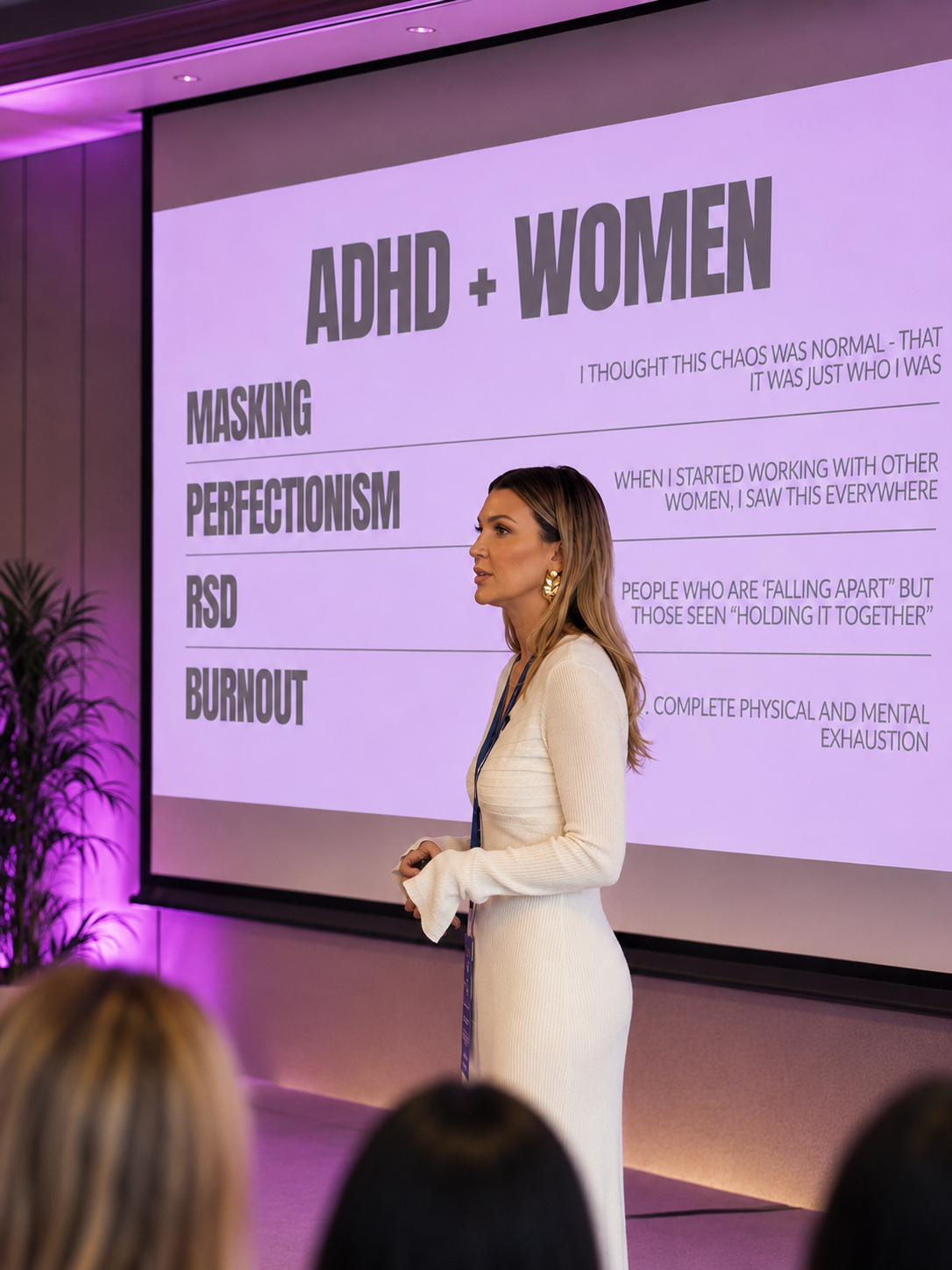
Masking, overperforming and anticipating criticism can take energy that work never sees. Better-fitting expectations and systems create a different starting point.
Track: agreed work goals, workload and engagement
Equip your managers
A diagnosis does not come with a universal instruction manual. Help managers respond to the person, identify barriers and move from goodwill to practical support.
Track: manager confidence and adjustment reviews
Agree what success looks like before starting. Use your own baseline and review both employee experience and business outcomes — without treating people as a productivity problem.
One philosophy. Different doors.
The right support for your people.
For managers & people teams
A diagnosis is disclosed. What happens next matters.
A manager-focused intervention supporting managers to respond more effectively when staff disclose a diagnosis. Supporting an employee cannot be reduced to expecting the individual to adapt.
- Move from assumptions to a conversation about individual needs
- Consider the barriers in systems, expectations and management
- Turn understanding into practical support and review
Safety before strategy
Change the conversation. Then the conditions.
Start with the person, not a checklist.
Trust, collaboration, respect and the freedom to be honest come first. Someone who has spent years performing competence may be hiding the very things they need support with.

Meet Amy Green
Psychology. Lived experience. The whole picture.
I worked agency shifts in psychiatric intensive care units across Greater Manchester, and as a police officer. I understand the realities of working under pressure — and the costs of holding everything together.
My approach brings together psychology, ADHD coaching, relationship-based support, trauma-informed practice and the social model of disability. Not every barrier can be solved through individual effort.
Questions from organisations.
Start with a conversation
What needs to change in your workplace?
Tell me about your team, the situation you're facing and what you want to be different. Let's work out the right next step.